

Scotland is one of the best countries in Europe for campervan travel. Vast open landscapes, quiet single-track roads, dramatic coastlines, and one of the most campervan-friendly legal systems in the world make it ideal for slow, flexible road trips.
Whether you’re planning to circle the Highlands, explore remote islands, or simply escape into nature for a few days, traveling Scotland by campervan gives you freedom that hotels and rigid itineraries can’t match.
This guide to campervan Scotland travel covers everything you need to know — costs, routes, legal rules, seasons, and real-world tips — so you can plan with confidence.
Why Scotland Is Perfect for Campervan Travel
Scotland feels made for campervans. Once you leave the central belt, distances open up, traffic thins out, and scenery takes center stage. You’re never far from a loch, a mountain pass, or a stretch of wild coastline, and the ability to stop when something catches your eye is one of the biggest advantages of traveling by campervan here.
Another major reason campervans work so well in Scotland is the culture. Campervans are common, expected, and generally welcomed — especially in rural areas — as long as you travel responsibly. Campsites are plentiful, but you’re not locked into them every single night, which gives Scotland a level of flexibility that many European countries simply don’t offer.
How Much Does a Campervan Cost in Scotland?
The cost of renting a campervan in Scotland depends mainly on the season and size of the vehicle, with summer prices significantly higher than the rest of the year.
In general, expect to pay £70–£120 per day in the low season, rising to £130–£220+ per day in peak summer (June through August). Short wheelbase campervans are the most affordable and easiest to drive, while larger motorhomes cost more and are less suited to narrow Highland roads.
Fuel costs are moderate compared to mainland Europe, and one advantage of Scotland is that many overnight stops — including basic campsites and informal stopovers — are inexpensive or even free.
Is Wild Camping Legal in Scotland with a Campervan?
This is one of the most searched and misunderstood topics around campervan Scotland travel.
Scotland has some of the most progressive outdoor access laws in Europe, but campervans are treated differently from tents.
Wild camping on foot is legal under the Scottish Outdoor Access Code. Sleeping overnight in a campervan, however, exists in a grey area. In practice, overnight parking in campervans is widely tolerated if done responsibly, but local restrictions apply in busy areas.
You can usually stay overnight if:
- You park discreetly and arrive late / leave early
- You don’t block roads, gates, or passing places
- You leave no trace and make no noise
- There are no signs explicitly prohibiting overnight parking
Some hotspots — especially around the Isle of Skye and Loch Lomond & The Trossachs — have stricter rules and enforcement. In these areas, campsites or official campervan stopovers are the better option.
Best Time to Travel Scotland by Campervan
Scotland can be visited year-round, but the experience varies dramatically by season.
Late spring through early autumn (May to September) is the most popular time for campervan trips. Days are long, roads are fully accessible, and campsites are widely open. June offers the longest daylight hours, while September brings fewer crowds and softer light.
July and August are peak season — not just for tourists, but also for midges, tiny biting insects that thrive in warm, still conditions. They’re manageable with preparation, but worth factoring into your plans.
Spring and autumn shoulder seasons are often the sweet spot: cooler temperatures, fewer campervans on the road, and lower rental prices.
Best Campervan Routes in Scotland
- North Coast 500: Scotland’s most famous road trip, looping around the northern Highlands. Expect dramatic coastal cliffs, empty beaches, winding mountain roads, and tiny villages. Best enjoyed over 7–10 days in a campervan, with plenty of time to slow down and explore side roads.
- Isle of Skye: One of Scotland’s most iconic destinations, known for rugged landscapes, fairy pools, jagged mountains, and moody light. A campervan allows you to explore early mornings and late evenings, when the island is quieter. Ideal for 3–5 days.
- Outer Hebrides: A more remote and peaceful alternative to Skye. White-sand beaches, turquoise water, and wide open spaces dominate this island chain. Perfect for travelers who want fewer crowds and a slower pace, with ferry crossings adding to the adventure.
- Cairngorms National Park: A great inland option featuring forests, lochs, wildlife, and mountain scenery. Roads are generally easier than the far northwest, making it a good choice for first-time campervan drivers or shoulder-season trips.
- Argyll & the West Coast: Less talked about but highly rewarding, this region offers sea lochs, islands, castles, and quiet coastal roads. It combines well with ferry hops and shorter driving days, making it ideal for relaxed campervan travel.
Driving a Campervan in Scotland: What to Expect
Driving in Scotland is generally relaxed, but rural areas require patience and confidence.
Many Highland roads are single-track, meaning cars share one lane with passing places. The system works well, but you need to stay alert, pull over courteously, and drive at a pace that matches the road — not the speed limit.
Campervans are best suited to these roads compared to large motorhomes, which can feel stressful in tight conditions. Take your time, plan shorter driving days, and remember that in Scotland, the journey is the experience.
Campsites and Facilities for Campervans
Scotland has an excellent network of campsites ranging from basic honesty-box sites to full-service holiday parks. Most offer:
- Toilets and showers
- Fresh water and waste disposal
- Electric hook-ups (optional)
In addition, Scotland has been expanding its campervan stopover schemes, particularly in the Highlands, allowing overnight stays for a small fee.
Booking ahead is recommended in summer, but outside peak season, spontaneity is still possible.
Is a Campervan Worth It in Scotland?
For most travelers, absolutely.
A campervan lets you:
- Stay close to nature without fixed accommodation
- Explore remote areas at your own pace
- Avoid constantly packing and unpacking
- Adapt your plans to weather and mood
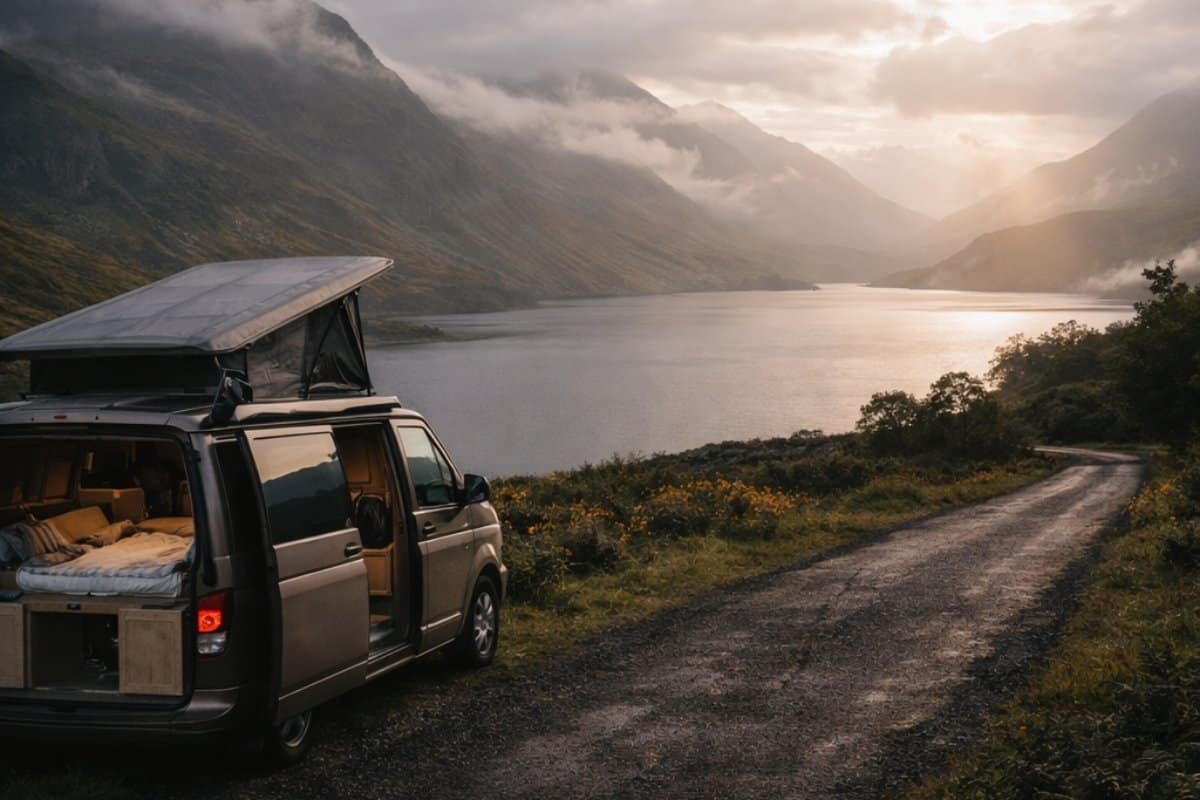
If your idea of Scotland involves quiet roads, misty lochs, coastal sunsets, and waking up surrounded by scenery, a campervan is one of the best ways to experience the country.
Final Thoughts: Campervan Scotland Travel
Scotland is a place that rewards curiosity and patience. Traveling by campervan allows you to linger in places that deserve time — whether that’s a windswept beach, a remote glen, or a roadside viewpoint that turns out to be unforgettable.
If you’re researching Campervan Scotland, you’re not just planning a trip — you’re choosing a slower, richer way to see the country.